Can Lah: A newcomer’s guide to Singlish
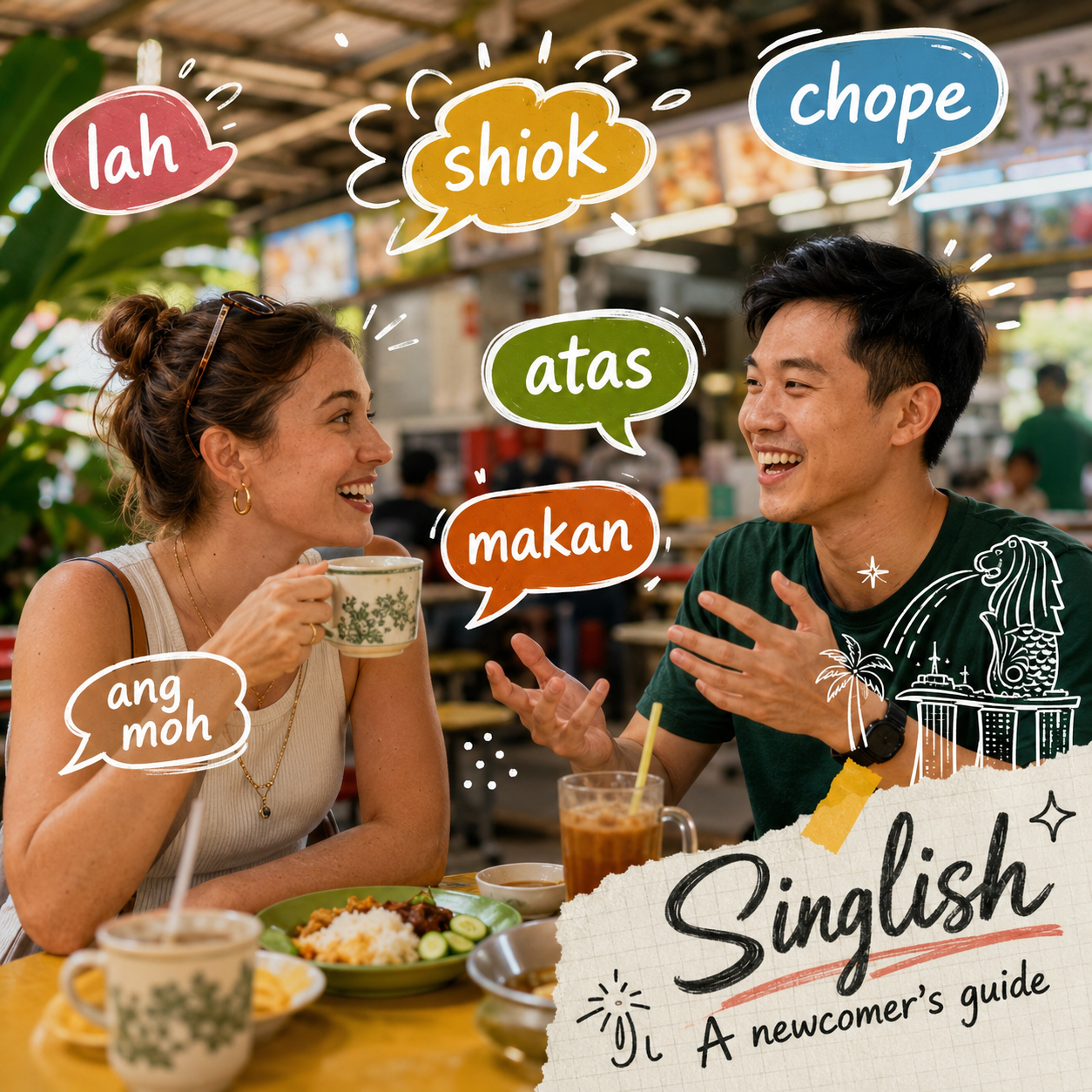
If you’re moving to Singapore from abroad, you will probably come across a whole set of words and expressions that do not sound quite British, American, or Australian. That is Singlish: Singapore’s unique and highly expressive dialect, shaped over time by English, Malay, Hokkien, Cantonese, Mandarin, and Tamil languages spoken here. The National Library Board describes it as an informal, colloquial form of English used in Singapore, and that mix is exactly what gives it so much flavour and local character.
For expats moving here, understanding a little Singlish will surely help. You will hear it in cafes (especially the old school kopitiams), hawker centres, taxis, playgrounds, offices, and increasingly in expat, neighbourhood, and work WhatsApp groups too. You don’t need to start speaking it yourself (unless you want to), but recognising a few common words will help you catch tone, humour, and social context much faster. Singlish is also tied to identity and belonging in Singapore, even as standard English remains the norm in formal and professional settings.
Singlish is having a moment beyond Singapore too. In March 2026, the Oxford English Dictionary added a fresh batch of Singapore and Malaysia related terms including jialat, kaypoh, wayang, and BTO. The year before that, in the March 2025 update, Oxford added alamak, kaya, kaya toast, nasi lemak, and tapau. That feels especially fun to me because there are few things I love more than kaya on a croissant or nasi lemak when I’m feeling a bit pekkish and snacky.
A practical Singlish glossary for newcomers
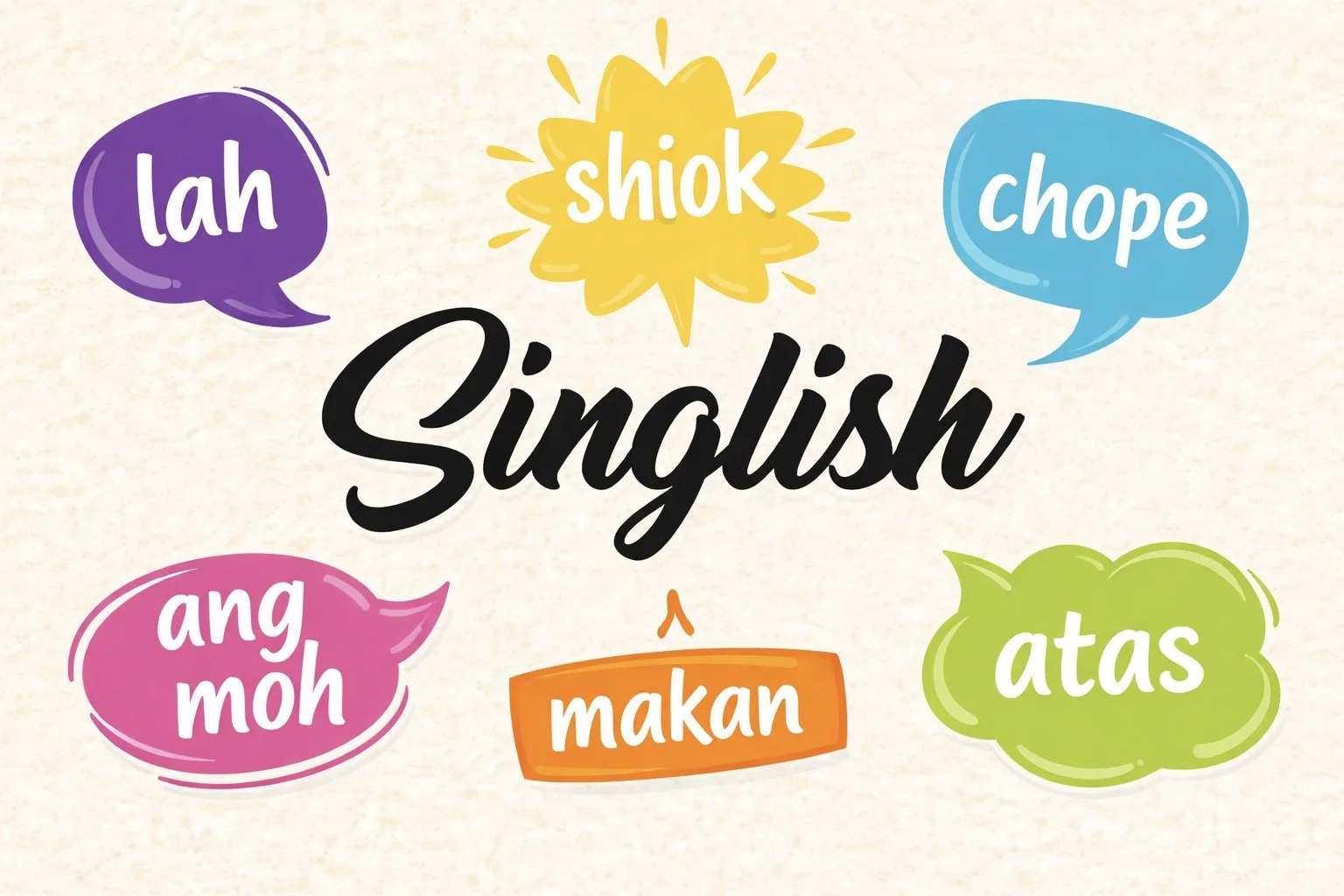
Here are some of the words you are most likely to hear early on.
Lah
The most iconic Singlish particle. It does not have a literal meaning, but adds tone, emphasis, warmth, or finality. If you’ve spent time in Hong Kong or southern China, you may already be familiar with this one.
Example: “OK lah, no problem.”
Lor, leh, meh, ah, hor
These little sentence ending particles do a lot of heavy lifting in Singlish.
Lor suggests resignation: “Like that lor.”
Leh adds persuasion or emphasis: “Help me leh.”
Meh shows doubt: “Really meh?”
Ah softens a question: “Can ah?”
Hor seeks agreement: “You know hor, cannot do that.”
Shiok
Deeply satisfying, delicious, or just excellent.
Example: “This chicken rice is so shiok.”
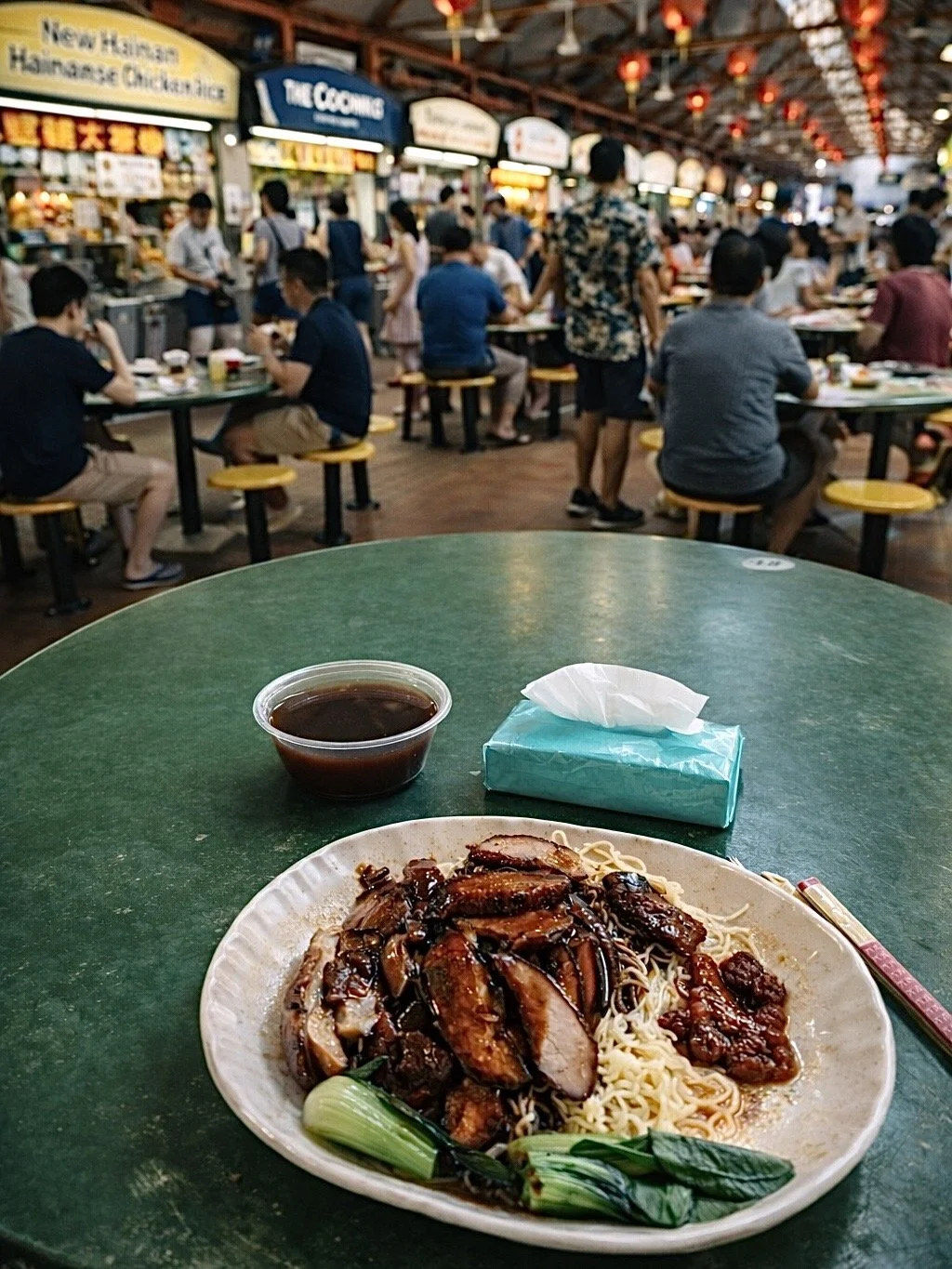
Chope
To reserve a seat or place, often with a tissue packet.
Example: “I chope the table already.”
Kiasu
Afraid to lose out, overly competitive, or eager not to miss an advantage.
Example: “He so kiasu, queue before the shop even opens.”
Kiasi
Afraid to take risks.
Example: “She kiasi, doesn’t want to try anything new.”
Paiseh
Embarrassed, shy, or apologetic.
Example: “Paiseh, I’m late.”
Sabo
To sabotage or stitch someone up.
Example: “Don’t sabo me ah.”
Alamak
An exclamation of surprise, frustration, or disbelief.
Example: “Alamak, I forgot my keys.”
Makan
To eat, or food in general.
Example: “Let’s go makan.”
Ang moh
A colloquial term for a white or Caucasian person. Also the name of an MRT station named after the ang moh who designed the bridge!
Example: “That ang moh really loves durian.”
Atas
Posh, fancy, or a bit high end.
Example: “That restaurant is very atas.”
Bo jio
You did not invite me. Usually said jokingly.
Example: “You all went for drinks bo jio me.”
Huat
To prosper or strike it lucky. Very common around Chinese New Year.
Example: “Huat ah!”
Shiok sendiri
Self satisfied or praising yourself a bit too much.
Example: “He shiok sendiri, says his idea is always the best.”
Kaypoh
Nosy or overly curious.
Example: “Don’t be so kaypoh lah.”
Steady pom pi pi
Reliable, cool, sorted, no problem.
Example: “He’ll handle it, steady pom pi pi.”
Chiong
To rush, power through, or go all out.
Example: “We will chiong the admin this weekend.”
Why this matters when you’re moving to Singapore
Language is one of the quickest ways into culture. If you are relocating, especially with children or as part of an expat assignment, understanding a few Singlish expressions can make everyday life feel much less foreign. It helps when you are listening to school gate chat, reading WhatsApp messages, making sense of local humour, or simply ordering lunch at a hawker centre without feeling completely lost.
It is also a useful reminder that Singapore is not culturally flat. It is international and efficient, so much so, you shouldn’t be surprised when you make a detailed request or pose a complex question and receive a simple “can” or “cannot” back in return!
A few extra cultural notes newcomers often find useful
1. Singapore is very multilingual
Many people naturally code switch depending on who they are speaking to and where they are. A sentence may start in English and pick up words from Mandarin, Malay, or dialect along the way. It’s the norm for standard English to be used in the workplace and Singlish to be mixed in out of emotion or in a more social context.
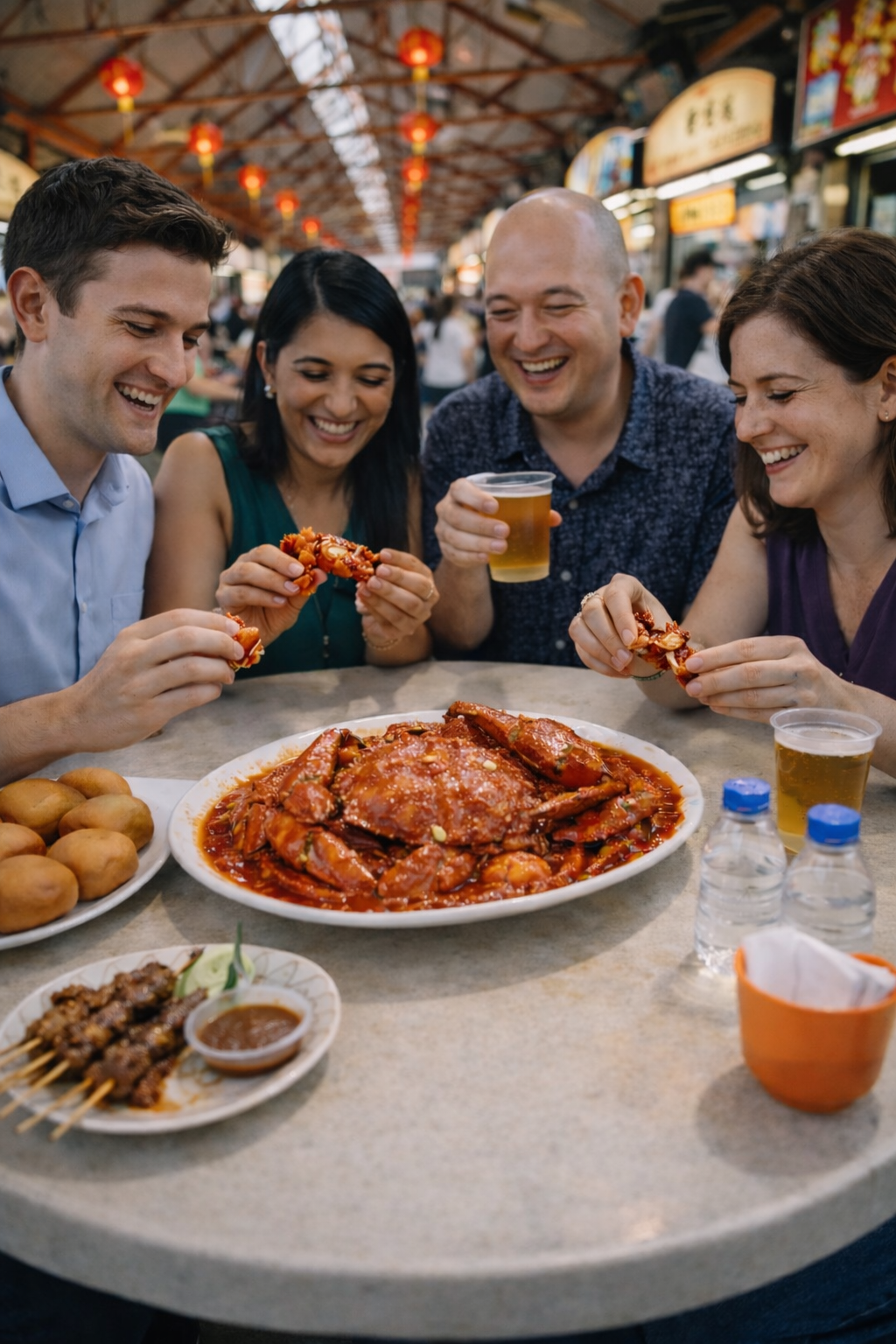
2. Hawker centres are part of the real Singapore
You will learn a lot there, not just about food, but about local routines, etiquette, and pace. Watching how people queue, order, chope seats, and talk to one another is a cultural education in itself! Bonus: the food!!!
3. Tone matters
In Singlish, particles such as lah, leh, lor, and meh are often less about the dictionary meaning of a sentence and more about the feeling behind it.
4. You do not need to perform “localness”
Newcomers do not need to force Singlish into every sentence. Understanding it is more helpful than overdoing it. Usually, listening well is enough.
5. Food words matter fast
Some of the first local words many newcomers learn are food related for good reason. Once you know tapau (take away), shiok, makan, and mala, daily life gets a lot more fun!
To sum it up…
You don’t need to master Singlish before moving to Singapore. But knowing a little will help you feel more oriented, more connected, and much quicker to catch what is really going on around you.
Or, to put it another way: can lah.
